All Categories
Featured
Offshore Delivery Frameworks: Cost Benefits in 2026
Understanding Regulatory Compliance for 2026 Hiring
Streamlining Business Workflow Architectures for 2026

Analyzing Global Labor Talent Shifts for 2026
Professional Report of Global Capability Center Trends
Table of Contents
Nearshore sales groups are often an excellent suitable for services that need real-time outreach and strong conversation quality. Groups in places like Paraguay or Belize can adjust their tone to local markets and develop trust more naturally in live calls. This design supports greater engagement and smoother handoffs, specifically for sales cycles that count on relationship-building.
Leveraging Business Process Optimization for Greater ROIThis design is especially reliable for producing interest at the top of the funnel.
Information and analytics outsourcing is when business generate outdoors groups to assist turn raw data into useful insights. This support permits internal groups to focus on technique while external partners manage the analysis required to guide day-to-day decisions. Nearshore analytics groups frequently work closely with clients to support reporting and forecasting.
Maximizing Corporate Agility With Custom Nearshore Models
This makes it much easier to change dashboards or present findings without long delays. While team sizes might be smaller sized, the close coordination helps businesses remain aligned as needs progress. Offshore analytics groups are appropriate for large-scale information processing and high-volume back-office tasks.
For projects that require less back-and-forth, offshore outsourcing can provide speed and scale without overwhelming internal resources. Selecting the ideal outsourcing design depends upon what your organization requires most today. Some teams focus on speed and real-time communication, while others concentrate on expense savings or using specialized skills. Your internal capacity and project scope all contribute.
Time zone alignment makes it much easier to meet to evaluate work and change quickly., opt for offshore. It's the most affordable alternative when your team can handle postponed feedback or structured updates., stick to onshore. Dealing with a U.S.-based group makes coordination easier, particularly for sensitive or high-touch projects., contracting out overseas or nearshore can assist cover execution without growing headcount., offshore can scale rapidly with a big skill pool and foreseeable costs., nearshore might be better.
Select nearshore for faster iterations, offshore for structured, high-volume builds. Picking the best outsourcing model is just the primary step. To get genuine outcomes, you require a dependable outsourcing partner who understands your concerns, from budget plan and time zones to security and communication. A strong partner can assist protect your copyright, lower risk, and make sure your team is supported by the ideal individuals in the ideal places.
Whether you're a start-up introducing fast or a recognized service ready to scale, we assist you examine prospective partners and make a confident decision on a partner you can trust. Our clients depend on us to advise contracting out business that regularly meet expectations. If you're checking out offshore, nearshore, or perhaps hybrid designs, TDS International Solutions can assist you to the most affordable and tactical outsourcing choice for your business.Schedule a call to get a custom suggestion and begin building a collaboration you can depend on!.
Key Corporate Growth Roadmaps for the Global Markets
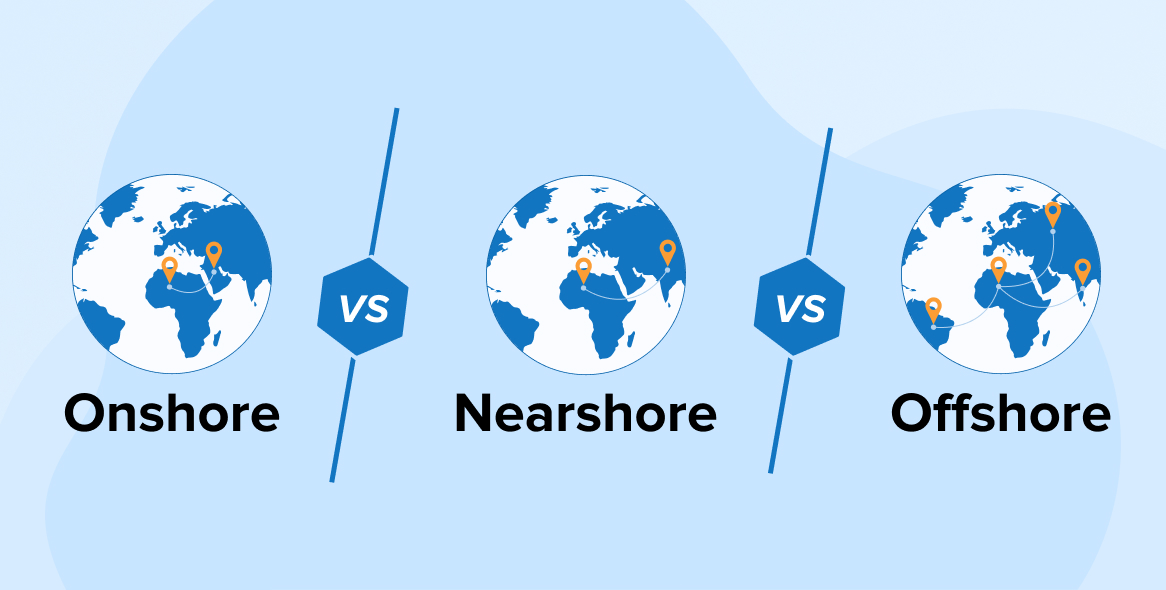
As companies continue to expand and globalize, the requirement for affordable and effective advancement designs has become significantly crucial. Three popular advancement designs that business frequently consider are nearshoring, offshoring, and onshoring. In this post, we will explore the differences in between these designs and assist you decide which one is finest for your service.
This cooperation company model was the very first one which appeared on the development market when the innovations occur. This is generally done to maintain higher control over the advancement process, lower threats associated with interaction and cultural differences, and assistance regional services and communities.
It was the primary approach of production for most items in the nation till the mid-20th century. However, the development of globalization and the rise of offshoring and nearshoring triggered a decrease in onshoring in the latter half of the 20th century. Companies began to move their manufacturing and production to countries with labour expense decrease and fewer policies, to increase profits and have a competitive benefit.
Refining Enterprise Process Performance Global Scaling
Many companies began to acknowledge the benefits of onshoring, such as much shorter supply chains, better interaction and cooperation, and more control over the quality and consistency of their items in their own country. In the last few years, onshoring has actually ended up being progressively popular as companies have dealt with obstacles in offshoring and nearshoring, such as increasing labour costs, supply chain disruptions, and geopolitical instability.
Brief Nearshoring HistoryThe history of nearshoring can be traced back to the early 1990s, when the North American Free Trade Agreement (NAFTA) was signed in between the United States, Canada, and Mexico. This arrangement created an open market zone in between the 3 countries, that made it much easier for companies to contract out work to Mexico.
Companies in Western Europe began outsourcing work to nations in Eastern Europe, such as Poland, Romania, and Ukraine, which provided lower costs and an extremely knowledgeable workforce without language barriers and a perfect geographical area. Today, nearshoring is a popular alternative to offshoring, as it permits companies to take advantage of lower labour expenses while preserving closer cultural and linguistic ties to their home nation.
Some popular nearshoring locations consist of Mexico, Canada, Eastern Europe, and South America. Offshoring is a service model where a business contracts out work to a foreign country, frequently to benefit from lower labour costs, access to specialized abilities, and other factors such as favourable tax policies or regulatory environments. The goal is to accomplish expense savings while increasing performance and efficiency.
producing companies started contracting out work to Japan, which was emerging as a considerable commercial power at the time. This pattern continued into the 1970s and 1980s, as U.S. business started contracting out work to other nations in Asia, such as Taiwan, South Korea, and China. In the 1990s and 2000s, offshoring ended up being much more popular, as the web and advances in interaction innovation made it simpler for companies to outsource work to nations worldwide.
Key Business Growth Roadmaps Across New Americas Markets
Today, offshoring stays a popular choice for business in numerous industries, such as manufacturing, software application development, and customer care. It permits companies to gain access to lower labour costs and specialized skills, while also offering opportunities for financial growth in developing nations. Some popular offshoring locations consist of India, China, the Philippines, and Western Europe.
Onshore, nearshore, and offshore are three various company designs for contracting out work to external partners. They vary based upon the location of the partner, ease and speed of collaboration, cost, and facilities. Here are the essential distinctions: Onshore outsourcing includes partnering service procedures with a business in the very same country or neighboring town as the customer business.

Latest Posts

Offshore Delivery Frameworks: Cost Benefits in 2026
Understanding Regulatory Compliance for 2026 Hiring
Streamlining Business Workflow Architectures for 2026